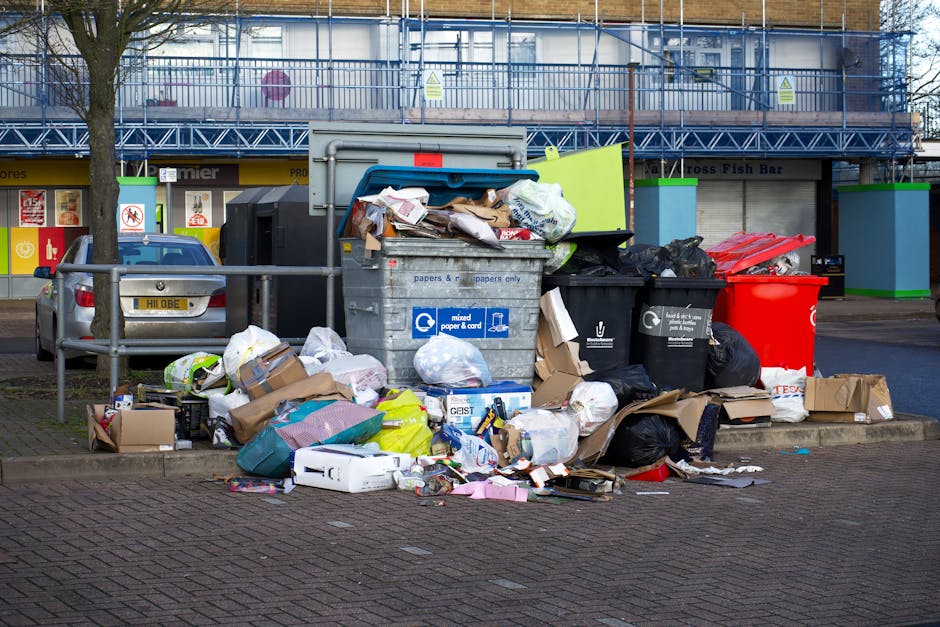
Palmers Green office rubbish removal case study local cafe
If you are searching for a Palmers Green office rubbish removal case study local cafe, you are probably dealing with a very real problem: clutter building up in a busy workplace, awkward storage space behind a counter, and the need to clear everything without interrupting service. That mix is common in small hospitality businesses. One day it is a few broken chairs and old packaging; the next it is a back room that feels like it has swallowed half the week's deliveries.
This article breaks down what a local, practical clearance job can look like in Palmers Green, why it matters for cafes and small offices, and how to approach it sensibly. You will find a step-by-step method, useful checks, a comparison of removal options, compliance points to keep in mind, and a realistic case-study style example that reflects the kind of work businesses often need. No fluff. Just the bits that actually help you make a decision.
Contents
- Why Palmers Green office rubbish removal case study local cafe Matters
- How Palmers Green office rubbish removal case study local cafe Works
- Key Benefits and Practical Advantages
- Who This Is For and When It Makes Sense
- Step-by-Step Guidance
- Expert Tips for Better Results
- Common Mistakes to Avoid
- Tools, Resources and Recommendations
- Law, Compliance, Standards, or Best Practice
- Options, Methods, or Comparison Table
- Case Study or Real-World Example
- Practical Checklist
- Conclusion
- Frequently Asked Questions
Why Palmers Green office rubbish removal case study local cafe Matters
A cafe in Palmers Green is not just a food business. It is often also a storage puzzle, a delivery point, a staff area, a customer-facing brand, and sometimes a tiny office all rolled into one. That means rubbish removal is rarely about one bin or one skip. It is about keeping the whole operation moving cleanly and safely.
In a local hospitality setting, rubbish can pile up for reasons that seem harmless at first. A new coffee machine arrives in a huge box. Broken shelving gets pushed into the stock room for "later". Old paperwork sits in a corner. A spare fridge, a damaged table, and a few dead chairs start taking over space. Before long, the back room smells faintly of cardboard and stale milk, and everyone is stepping around things. Not ideal, really.
Office rubbish removal matters because it protects time, hygiene, staff morale, and the customer experience. In a cafe, those are not side issues; they are the business. A tidy workspace reduces trip hazards, helps staff work faster, and makes stock rotation simpler. It also helps when you want to present a more professional image to landlords, auditors, insurers, or just a very observant customer peering through the kitchen door.
For local businesses, there is another layer: operational continuity. If a clearance job is handled badly, you can lose a morning of trade. If it is planned well, the space is cleared quickly, the waste is separated properly, and the team can get back to service with less disruption. That is the difference between a mess and a managed process.
If the waste includes furniture, fixtures, or bulky items, it is often worth looking at related services such as office clearance and business waste removal, especially where the job needs more than a basic bin emptying.
How Palmers Green office rubbish removal case study local cafe Works
There is a straightforward rhythm to a good clearance job. First, the waste is identified. Then it is sorted. Then it is removed in a way that suits the property, the business hours, and the type of material. That sounds obvious, but plenty of jobs go wrong because people skip the sort-and-plan stage and go straight to lifting.
In a local cafe office or back-of-house area, waste usually falls into a few familiar categories:
- old paperwork and packaging
- damaged office furniture such as desks, chairs, and cabinets
- broken small appliances
- general rubbish and mixed waste
- fixtures from a refit or rearrangement
Some items can be removed quickly if they are already bagged or stacked. Others need a little more care. For example, a heavy filing cabinet in a narrow corridor is not the same as a pile of cardboard from a morning delivery. The access route matters. So does the timing. So does whether the cafe stays open during the work. You do not want a clearance team blocking the only way to the till at 8:30 a.m. on a weekday. That would be a bit of a disaster.
Good rubbish removal should feel controlled. A proper team will usually assess access, estimate volume, explain what happens to reusable or recyclable materials, and then remove the waste efficiently. If the job involves mixed commercial waste, it may be sensible to combine removal with a broader plan using waste removal and the recycling-focused approach described in recycling and sustainability.
The key thing is that the removal process should fit the business, not the other way around.
Key Benefits and Practical Advantages
There are obvious benefits, and then there are the quieter ones that only show up once the clutter is gone. In our experience, it is the quieter ones that businesses notice most.
- More usable space: A cleared office or back room makes storage, admin, and day-to-day tasks easier.
- Less risk of accidents: Fewer obstacles means fewer trips, bumps, and awkward lifts.
- Faster working: Staff spend less time moving around junk and more time doing actual work.
- Better appearance: Clean, calm storage areas support the overall professionalism of the business.
- Improved hygiene: Removing cardboard, dust-trapping items, and broken materials helps keep the environment fresher.
- Better waste separation: It is easier to recycle and dispose of items correctly when everything is sorted properly.
For cafes, there is also an emotional benefit that does not get talked about enough: relief. Once the old stock, broken furniture, and forgotten clutter are removed, the space feels lighter. Staff tend to notice it straight away. There is less friction in the room, less visual noise, and less of that low-level annoyance that builds up when everyone knows the storage cupboard is a mess but nobody has time to tackle it.
If the clearance involves replacing worn items, it can also make sense to review furniture clearance and, where needed, furniture disposal so the job is handled as part of one clean process rather than several small, messy ones.
Who This Is For and When It Makes Sense
This kind of service is useful for more than one type of business. A small cafe with a single office nook is one example, but not the only one. It also makes sense for bakeries, coffee shops with prep rooms, shared workspaces, retail units with stock rooms, and local businesses that have combined admin and customer service space.
You may need office rubbish removal if:
- you are reorganising a back office or staff room
- you have old office furniture that is no longer needed
- you are preparing for a refit or rebrand
- you are moving premises and need a clean handover
- you have accumulated waste after a busy trading period
- you want to improve safety and storage efficiency
For some businesses, the trigger is not a big event. It is just the slow creep of stuff. A shelf starts as a temporary holding area. Then it becomes permanent. Then the temporary boxes become a permanent wall. You know how it goes. Suddenly, the back office looks like it has been there since the previous tenancy.
There is also a difference between clearing a true office and clearing a broader business area. If your cafe has a stock room with mixed items, some tasks may overlap with business waste removal or, if the space includes home-style storage or staff accommodation, possibly home clearance principles as well. The right service depends on what is actually there, not just the label on the door.
Step-by-Step Guidance
If you want the job done well, keep the process simple and orderly. Here is the method that usually works best.
- Walk the space first. Look at every item and divide it into keep, remove, recycle, or dispose. Be honest. That old printer is not coming back to life.
- Check access routes. Measure doorways, stairwells, and tight corners. In small Palmers Green premises, access is often the part that slows everything down.
- Identify any awkward items. Heavy furniture, sharp materials, electrical items, and mixed waste may need special handling.
- Choose a sensible removal time. Early morning or off-peak hours often reduce disruption to staff and customers.
- Prepare the area. Move fragile items, clear a path, and keep bins or storage areas open for separation.
- Ask how materials will be handled. Reuse, recycling, and disposal should be explained clearly.
- Complete a final sweep. Once the rubbish is out, check floors, corners, and any hidden shelves that were easy to forget.
A practical tip: take a few photos before the clearance starts. Not for show, just for reference. It helps if staff later wonder whether something should have stayed or gone. Also, it is easier to judge progress when you can see the before-and-after clearly.
If you are comparing options for larger mixed loads, services like builders waste clearance may be relevant where the cafe has also had a fit-out, snagging work, or minor refurbishment. A lot of small business jobs end up being a bit of everything.
Expert Tips for Better Results
Small decisions make a big difference. That is the honest truth of rubbish removal.
- Group items by type before the team arrives. Cardboard, old furniture, and general rubbish should not be mixed if you can avoid it.
- Keep paperwork separate. If documents contain customer or staff information, they may need secure handling rather than casual disposal.
- Use a single contact point. One person should approve what goes and what stays. It stops confusion.
- Plan around delivery times. Cafes are busy places. Clearance and delivery trucks do not always make good neighbours.
- Leave room for the unexpected. There is almost always one extra item tucked behind a cabinet or under a counter.
Here is a small but useful one: if the space feels too cluttered to sort, start with the largest item first. Once the bulky furniture goes, the room suddenly makes sense again. The rest of the job feels less overwhelming. Funny how that works.
And if the business is sensitive about customer experience, keep the noise and movement in mind. A good clearance should be tidy, calm, and quick. No dragging chairs across the floor for twenty minutes while customers sip coffee two metres away. Nobody wants that soundtrack.
Common Mistakes to Avoid
People usually do not get rubbish removal wrong because they are careless. They get it wrong because they are rushed. Still, a few common mistakes show up again and again.
- Leaving sorting until the day of the clearance. This slows everything down and creates confusion.
- Underestimating the volume. What looks like a small pile can turn into several loads once you start moving things.
- Ignoring access issues. Narrow stairs, shared entrances, and parked vehicles can easily cause delays.
- Mixing recyclable materials with general waste. That often makes disposal less efficient.
- Forgetting about confidential items. Old paperwork and storage media should be handled with care.
- Booking too close to peak trading hours. It can create stress for staff and a poor customer experience.
The big one, though, is treating all rubbish as the same. It is not. A broken office chair, a box of packaging, and an old appliance may all need different handling. Getting that right saves time and reduces hassle later. Less drama, basically.
Tools, Resources and Recommendations
You do not need a warehouse full of gear to prepare for a small business clearance, but a few simple tools help a lot.
- strong bin bags for loose rubbish
- labels or markers for sorting
- boxes for paperwork and small items
- gloves for staff who are helping sort items
- a tape measure for checking access
- a phone camera for before-and-after reference
For planning and budgeting, the most useful resources are often the service pages that explain the type of clearance you need and the business policies that show how the company works. For example, you can review pricing and quotes to understand how estimates are usually approached, or read insurance and safety if you want reassurance about how the work is managed on site.
If you are checking a provider for the first time, it is also sensible to read their about us page so you understand who you are dealing with, and their terms and conditions so there are no awkward surprises. Boring? A bit. Useful? Very.
Law, Compliance, Standards, or Best Practice
For a cafe or office, waste handling should follow sensible UK business practice. That usually means duty of care, proper segregation where possible, safe lifting, and careful handling of anything confidential or potentially hazardous. You do not need to become a compliance specialist overnight, but you do need to take the basics seriously.
Best practice usually includes:
- using a reputable carrier for removal
- keeping records of what was removed if the waste is business-related
- separating recyclable materials when practical
- protecting staff from lifting or sharp-edge injuries
- avoiding fly-tipping or informal dumping arrangements
If the waste includes electrical items, glass, metal shelving, or damaged fixtures, extra care is sensible. If it includes confidential papers, even more so. The goal is simple: remove the clutter without creating a new problem.
Health and safety matters too. A cluttered stock room is a common accident risk, especially in a fast-moving hospitality environment where people are carrying trays, boxes, or hot drinks. The idea is not to overcomplicate things. It is to keep the workplace workable and safe.
Options, Methods, or Comparison Table
There are a few ways to deal with office and cafe waste. Which one suits you depends on volume, timing, and how mixed the items are. Here is a simple comparison.
| Method | Best for | Pros | Limitations |
|---|---|---|---|
| Staff sorting and disposal | Small amounts of light waste | Cheap, flexible, easy to start | Time-consuming, not ideal for bulky items |
| Bin-only disposal | Routine daily waste | Simple and predictable | Not suitable for furniture or one-off clear-outs |
| Skip hire | Large mixed clearances with space outside | Useful for ongoing loading | Needs space, permits may be needed, can be overkill for small jobs |
| Professional office rubbish removal | Bulky, mixed, or time-sensitive clearances | Fast, efficient, less disruption | Usually best for planned one-off jobs or major tidy-ups |
For a local cafe in Palmers Green, professional removal is often the most practical option when the job includes furniture, mixed rubbish, or a tight time window. If there are also household-style items from a staff room or flat above the business, services like flat clearance can sometimes be relevant depending on the layout.
Case Study or Real-World Example
Here is a realistic example of how this kind of job tends to unfold.
A local cafe in Palmers Green had a back office that had slowly become a catch-all space. There were boxes from old deliveries, two damaged chairs, a broken shelf unit, a stack of paperwork in folders, and a small amount of general rubbish. Nothing dramatic on its own, but together it made the room difficult to use. Staff had to squeeze past items to reach stock, and the room had reached that awkward point where everyone knew it needed sorting, but nobody wanted to be the one to start.
The first step was a quick walk-through to separate what was staying from what was going. The cafe team kept important records, set aside reusable items, and identified the bulky furniture for removal. The clearance was scheduled outside the busiest service window, which mattered more than people sometimes realise. If you are standing there at 11 a.m. with the lunch rush ahead of you, you do not want a room full of moving boxes and extra foot traffic.
The removal itself focused on speed and tidiness. Loose waste was collected first, then the furniture, then a final check of the room so nothing usable was accidentally left behind. The result was not glamorous, but it was useful. The office felt bigger. Staff could access what they needed. The room smelled fresher. And, perhaps most importantly, people stopped talking about the room as a problem.
That is often the real win. Not drama, not a huge transformation. Just a place that works again.
If a similar clearance needs to include old stockroom furniture, broken seating, or surplus fixtures, it may also be worth looking at furniture disposal so that no usable materials are treated as general rubbish by mistake.
Practical Checklist
Use this quick checklist before booking a clearance job:
- Have you identified every item that needs removing?
- Are there any confidential papers or data-sensitive materials?
- Is there clear access from the street to the waste area?
- Do you know which items are bulky, sharp, or fragile?
- Have you chosen a time that avoids your busiest trading window?
- Have you separated recyclable materials where possible?
- Do staff know what should stay and what should go?
- Have you checked whether furniture or appliances need special handling?
- Do you want photographs for records or landlord handover?
- Have you reviewed the provider's safety and payment information?
One extra tip: leave a little space in the room for the final sweep. People always forget the small stuff until the last minute. A charger here, a cable there, a spare folder on top of a shelf. It happens.
Get a free quote today and see how much you can save.
Conclusion
Palmers Green office rubbish removal for a local cafe is really about keeping a small business functional, tidy, and ready for trade. The right approach is practical rather than flashy: sort the waste, protect access, remove bulky items safely, and choose a time that does not disrupt customers or staff.
If you handle the job with a bit of planning, it becomes much easier than most people expect. The space feels better. The team feels less boxed in. The business looks more in control. And that matters, especially in a local setting where every square metre has to earn its keep.
When the clutter is gone, you notice the room differently. It breathes again. That is often the quiet sign that the job was worth doing.
Frequently Asked Questions
What does Palmers Green office rubbish removal for a local cafe usually include?
It usually includes mixed office and back-of-house waste such as cardboard, old paperwork, broken chairs, shelving, packaging, and other bulky items that are no longer needed.
Is this the same as regular bin collection?
No. Regular bin collection is for routine waste. Office rubbish removal is usually for larger, one-off, or awkward items that need manual collection and proper sorting.
Can a cafe stay open during the clearance?
Often yes, but it depends on access, noise, and how much waste is being removed. Many businesses prefer early morning or off-peak timing to keep disruption low.
What should I sort out before booking a clearance?
Set aside confidential paperwork, decide what furniture or equipment is staying, and clear a path so the team can work safely and quickly.
What happens to recyclable items?
Where practical, recyclable materials should be separated and handled responsibly. Cardboard, metal, and some furniture components may be suitable for recycling or reuse.
Do I need office rubbish removal if I only have a few bulky items?
If the items are heavy, awkward, or difficult to move, a clearance service can still be worthwhile. A single damaged cabinet can be more trouble than a whole stack of light rubbish.
What if the waste includes old furniture?
That is common. Furniture can often be removed alongside general office waste, though it is worth checking whether any items are reusable or should be handled separately.
How do I avoid disrupting customers?
Book the clearance outside peak trading hours, keep the route clear, and make sure staff know where the work will happen. A small bit of planning goes a long way.
Is there anything compliance-related I should think about?
Yes. Businesses should handle waste responsibly, protect confidential information, and follow sensible health and safety practice. If in doubt, keep items separated and ask questions before the job starts.
What is the best option for a small Palmers Green cafe with a mixed back room?
For many small cafes, a professional clearance is the simplest option when the room has mixed rubbish, bulky items, or limited access. It saves time and keeps the business running more smoothly.
Can this type of clearance help with a refit or rebrand?
Absolutely. If you are changing the layout, replacing furniture, or preparing for a new look, clearance is often the first practical step. It gives you a clean slate to work from.
Where should I start if I am not sure what needs removing?
Start with a quick walkthrough of the space and make three piles: keep, remove, and unsure. That simple step usually makes the rest of the decision much easier.